Monday, September 30, 2013

Everything Old Is New Again: Revelations From Political Idiocies Past...


Working in a used bookstore has been a fascinating exposure to history, in the form of once-current publications meant to expose fraud and malfeasance. Every administration has had some of each in its record, to be sure; but what's struck me is the unchanging quantity of propaganda, meant to sway opinion, confound honest inquiries, and keep the voting public (or just enough of them) unaware of what's really been going on.

My example de jour: the infamous 'China Lobby' of the 1940s, lead by Madame Chiang Kai-Shek and her chosen clique of followers in official (and social) wartime Washington. After the war with Japan was won, her husband the Generalissimo Chiang Kai-Shek ought to have been well able to reform his country's  politics and improve his impoverished people's sorry lot. Gods alone knew that we'd paid enough in foreign aid and military assistance to help him do so---somewhere over $30 billion, by then-President Harry Truman's reckoning.

Mao Tse-Tung's Communists, however, had a head start toward winning loyalties among rural Chinese; Chiang's forces ultimately found themselves driven from power, and their leaders fled offshore to Taiwan. In Washington, "Who Lost China?" became a war cry of political scalp-hunters...and the opening act of the witch-hunts which blighted American politics for the next decade and more.

Recently the same tactics and strategy were brought to bear on President Obama's administration, all over the insurgent attack which killed Ambassador Chris Stephens in Benghazi. The subsequent GOP investigations were (and are) rife with 'terminological inexactitudes'; a smallish monitoring outpost became a diplomatic facility, an opportunistic attack became a major security lapse, and fragmentary reports of a squalid skirmish became a battle monitored in real time from the White House Situation Room, with Barack Obama vacillating while Ambassador Stephens and his bodyguards were killed. In short, lies by strident opportunists---remarkably like the accusations made by Madame Chiang's supporters in 1949. I'm not the only one who gets this, but I'm among the only ones old enough to know how "Who Lost China?" has mutated into "Who Botched Benghazi?"

In fact, any deficiency in the security at our embassies and consulates across the Near and Middle East goes right back to Congressionally-mandated budget cuts. In trying to 'slap' then-Secretary Of State Hillary Clinton, conservatives undermined the State Department's ability to protect facilities and personnel---which, tragically, included Chris Stephens. He was the casualty we could least afford to suffer.

Wednesday, September 25, 2013

Tales From Fly-Over Country...

"All men dream; but not equally. Those who dream by night in the dusty recesses of their minds wake in the day to find that it was vanity; but the dreamers of the day are dangerous men, for they may act out their dreams with open eyes, to make it possible". -T.E. Lawrence 
                           
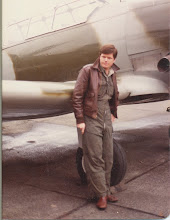
  My dreams of flight became real in October of 1971, as the result of my taking on a job which no one else wanted. I was a journalism student at a college in rural California, and a local air show was just getting organized to raise funds for a proposed air museum. Everyone else taking the class just HAD to do something else that weekend, whether real or invented. I didn't, and, in addition to a nice line-up of regional performers, there was to be an appearance by some of the replica Japanese fighters and bombers built for the film TORA TORA TORA. My inner smartass liked the idea of hustling a ride in one of these dudes and mock-strafing a civlian airfield. 

 The FAA official supervising the show wasn't so fun-loving. These were technically experimental aircraft, he pointed out, and I had no business as pilot or crew member aboard one of them. No deal. He wasn't totally heartless, as it turned out; there was a formation flight of North American AT-6 trainers set to stage a fly-by as part of the show. I could wangle a back-seat with one of them, if I asked nicely. (I should have been nicer to him. He was later one of my ground-school instructors, and I argued with him. He didn't like it. Things could have gone a lot better. My fault, pretty much entirely.) 

 I wasn't coming to this proposition in complete ignorance. My dad's work in aerospace had infected me with a deep fascination for flight, and I'd read literally everything about it that I could lay my hands on. I'd lucked out amazingly when a neighbor, himself a former Eighth Air Force radioman, gave me a whole collection of Assen Jordanoff's texts on aeronautics and aviation. Jordanoff, a Bulgarian expatriate and a pioneering airman, became one of America's best and most influential test pilots between the wars. I plowed through those volumes, even where much of the content was technically beyond me at the time. And I'd had a whole glorious ten minutes in a Bell helicopter over Long Beach Harbor---a tenth-birthday gift from my dear grandfather. I was primed, ready to fly, and had extensive if still-hypothetical knowledge on the subject. I THOUGHT I was ready for this. 

After introductions to the guys with whom I'd be flying (a Civil Air Patrol group who flew and maintained AT-6s), we headed to the display area where our mounts were parked. These had been advanced American and Allied pilot-training aircraft during WW2, and for a long time thereafter in many of the world's air forces. Squarish, no-nonsense in appearance, with a 600-hp radial engine up front, I knew these weren't going to make for a quiet ride. Our pilots unlocked the brakes, other crew removed the tie-down ropes, and we pushed them toward the run-up area. Everyone else knew what they were doing; I asked far too many questions, but climbed into the rear cockpit and started settling in. Well, sort of. I dropped a shearling-lined glove, which fell past the floor-plates into the belly of the airplane. There was no time to retrieve it, but I saw no control cables or anything else for it to interfere with. Hastily I strapped in, as the controls moved eerily around me (control-stick wavering, throttle and prop controls sliding back and forth on the 'quadrant' mounting). Steve Crowe, the pilot, gave a radio call, got clearance, the starter energized with a whine, and prop blades began to pull through. With a loud cough and belches of exhaust, that big engine caught and filled the cockpit with sound. Slipstream rushed  by our open canopies, and at a signal we began to taxi. Five of us, plus a an ex-Navy Corsair, headed toward the run-up area short of the runway, S-turning carefully to avoid collision (a big, radial-engined airplane with a tailwheel is 'blind' to anything directly ahead---one of the first lessons which young pilots learned when flying these dudes).

We lined up on the runway, and at a signal six throttles went forward as one. The sound was overwhelming, and we came up onto the main landing gear---and lifted off into smooth flight. Gear UP, flaps UP, and we formed up line-abreast. It had to be nearly as loud on the ground as it was in my rear seat; up here, I looked with growing delight at the smooth formation on either side of me. We banked to the right, and my First Flying Lesson began---I tried to stay level with the horizon as we banked. Wrong---sit level with the airplane, I recalled from long-ago reading. I relaxed, and marveled at the open desert vista all around me. Fifteen hundred feet isn't much altitude, but it momentarily seemed Olympian as our formation turned onto the 'downwind' leg of our traffic pattern, with the airfield looking like a precisely detailed model on our right. Another banked turn onto 'base' leg, then onto final approach for a low-altitude flyby. We came level at about thirty feet, roaring past the showline---I was momentarily sorry I couldn't be down there and up here simultaneously! Then we pulled up, and flew another big bomber-sized pattern before throttling back, dropping flaps and gear, and dropping to the runway for a sedate landing, rollout, and taxi back to the display area. After we shut down and tied back down, I tried to discreetly recover my errant glove. I snagged it, but standing virtually on your head in an airplane cockpit can hardly be called 'discreet'. Despite the grins at my naievete, I liked these people and LOVED flying---and was determined to make some place for myself in this new world I'd discovered.